Government
Political System
Spain is a social and democratic state governed by law, and it has adopted the Parliamentary Monarchy as its political form. National sovereignty rests with the Spanish people, from whom the powers of the state emanate.
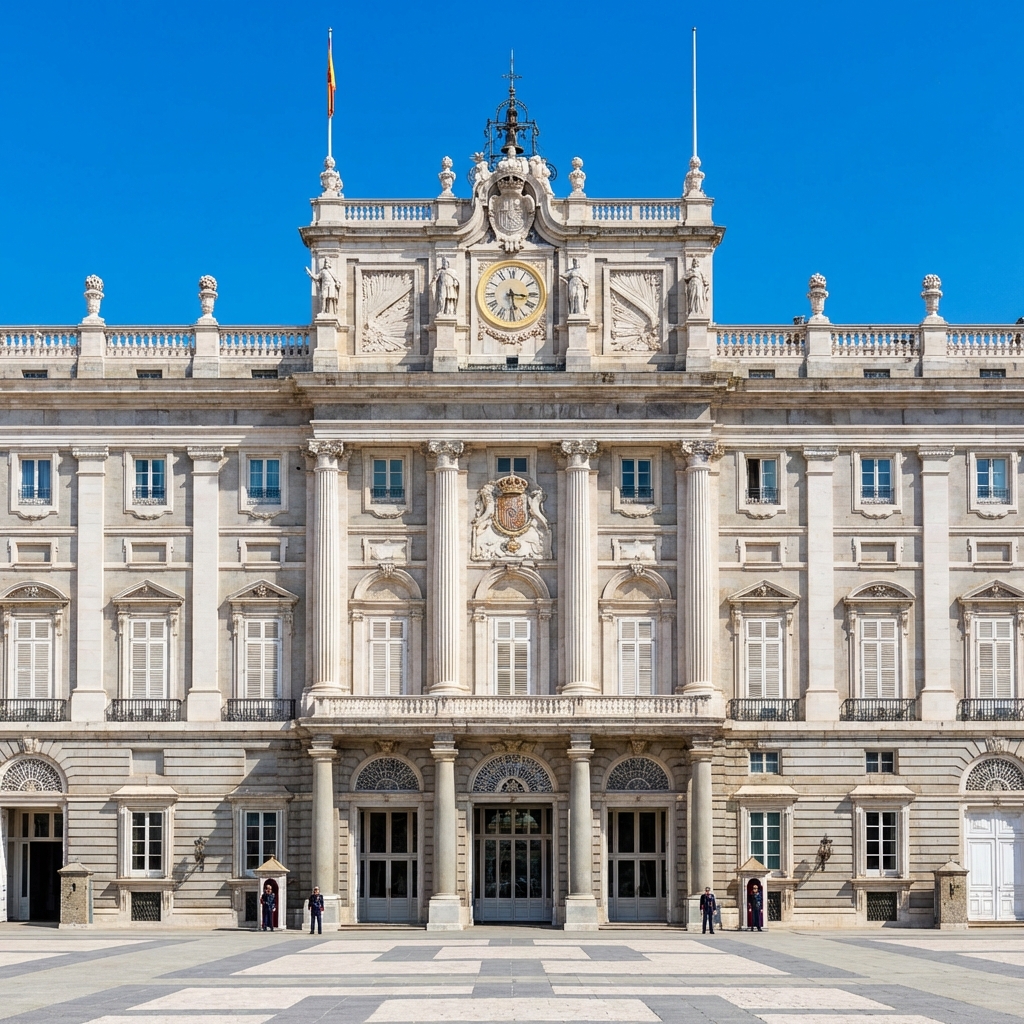
Head of State
The King, currently Felipe VI, is the symbol of the unity and permanence of the state. His functions are moderating and representative, and he holds no executive power.
Legislative Power
The Cortes Generales represent the Spanish people and hold legislative authority. They have two chambers:
• Congress of Deputies: Lower house (350 deputies).
• Senate: Upper house of territorial representation.
Executive Power
Led by the Prime Minister, who is chosen by the Congress of Deputies. The Prime Minister appoints the ministers and directs domestic and foreign policy.
Territorial Organization
Spain is one of the most decentralized countries in Europe. It is divided into 17 Autonomous Communities and 2 Autonomous Cities (Ceuta and Melilla), which enjoy broad powers over education, health care and land use planning.
| Autonomous Community | Capital |
|---|---|
| Andalusia | Seville |
| Aragon | Zaragoza |
| Asturias | Oviedo |
| Balearic Islands | Palma |
| Basque Country | Vitoria-Gasteiz |
| Canary Islands | Las Palmas / Santa Cruz |
| Cantabria | Santander |
| Castile and Leon | Valladolid |
| Castilla-La Mancha | Toledo |
| Catalonia | Barcelona |
| Extremadura | Merida |
| Galicia | Santiago de Compostela |
| Madrid | Madrid |
| Region of Murcia | Murcia |
| Navarre | Pamplona |
| La Rioja | Logrono |
| Valencian Community | Valencia |
International Relations
Spain is a member of the European Union (since 1986), NATO, the OECD and the United Nations. It keeps a special relationship with the countries of Latin America, with which it shares history, culture and language, and it hosts the Ibero-American Summits.