History of Spain
1. Prehistory and Antiquity
Hominids have been present on the Iberian Peninsula for 1.2 million years, as finds in the Sierra de Atapuerca show. Homo sapiens arrived about 35,000 years ago and left a mark in the cave paintings of the Cantabrian region (Altamira).
The first historical civilizations were the Iberians (east and south) and the Celts (north and west). In the south flourished the mysterious kingdom of Tartessos. Later, Phoenicians, Greeks and Carthaginians set up trading colonies along the Mediterranean coast.
2. Roman Hispania
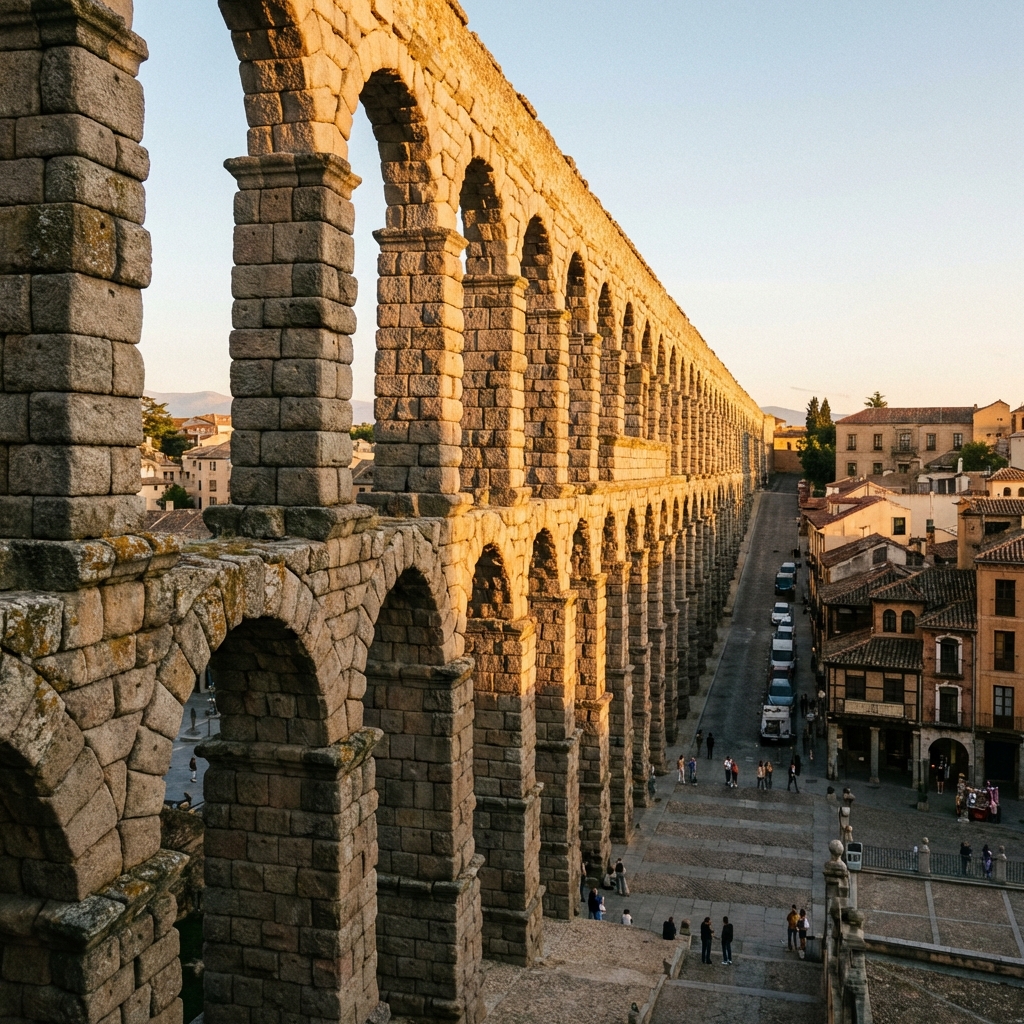
Rome began its conquest in 218 BC during the Second Punic War. The process, which lasted two hundred years, ended with the complete Romanization of the peninsula. Hispania became a fundamental part of the Empire, supplying resources (mines, oil, wine) and great figures such as the emperors Trajan, Hadrian and Theodosius I, as well as the philosopher Seneca.
"Rome gave Hispania its laws, its language and its roads, uniting the peninsula for the first time under one authority."
3. The Middle Ages
The Visigothic Kingdom
After the fall of Rome (476 AD), the Visigoths established a kingdom with its capital at Toledo, achieving political and religious unity across the peninsula.
Al-Andalus (711-1492)
In 711, Muslim troops crossed the Strait of Gibraltar. Within a few years they controlled nearly the whole peninsula and founded Al-Andalus. During the Caliphate of Cordoba (10th century), it was the cultural and economic power of Europe.
The Reconquista
In the northern mountains, Christian strongholds (Asturias, Leon, Navarre, Aragon) survived and began a slow advance south. This eight century process forged the warrior, frontier character of medieval Spanish society.
4. The Spanish Monarchy
The year 1492 marked a global milestone: the Catholic Monarchs conquered Granada (the end of the Reconquista) and sponsored the voyage of Christopher Columbus, who reached America.
Under the Habsburgs (16th and 17th centuries), Spain became the world's dominant power. Charles I and Philip II ruled a global empire with territories in Europe, the Americas, Africa and Asia (the Philippines). It was also the era of the Golden Age of letters and the arts.
5. The 19th and 20th Centuries
The 19th century was turbulent: the War of Independence against Napoleon (1808), the loss of the American empire, and three civil wars (the Carlist wars).
The 20th century brought the Second Republic (1931), socially polarized, which led to the Spanish Civil War (1936-1939) and the dictatorship of Francisco Franco that followed. After his death in 1975, Spain amazed the world with a peaceful Transition to democracy, enshrined in the Constitution of 1978. Joining the EU in 1986 cemented the country's full modernization.